What is One Example of Consensus? A Deep Dive
Consensus is a decision-making process where a group of people come to a general agreement. It’s about finding a solution that everyone can support, even if it’s not necessarily their first choice. Unlike voting, which relies on a majority, consensus aims for widespread acceptance. Understanding examples of consensus in action can clarify its benefits and challenges.
An Illustrative Example: Community Garden Planning
Let’s consider a community garden project. A neighborhood wants to create a shared garden space, and they need to decide on several key aspects. This scenario provides a tangible example of consensus-building in action.
Initial Ideas and Concerns
The initial meeting brings forth a variety of ideas:
- Some residents want raised garden beds for accessibility.
- Others prefer in-ground plots to maximize space and reduce costs.
- Concerns arise about water usage, particularly during dry seasons.
- There’s disagreement about whether to prioritize vegetables or flowers.
- Some worry about attracting pests and wildlife.
The Consensus-Building Process
Instead of voting on each point, the group engages in facilitated discussions. They actively listen to each other’s perspectives and try to understand the underlying needs and concerns.
- Information Gathering: They research the costs and benefits of raised beds versus in-ground plots. They also investigate water-saving irrigation techniques and pest control strategies.
- Brainstorming Solutions: The group proposes compromises. For example, they could dedicate a portion of the garden to raised beds and another to in-ground plots. They might agree on a water-wise irrigation system.
- Addressing Concerns: They tackle concerns about pests by implementing organic pest control methods and selecting plants that are less attractive to wildlife. They also establish clear guidelines for gardeners to maintain their plots.
- Refining Proposals: Based on the discussions and new information, the initial proposals are modified and refined.
- Seeking Agreement: The facilitator guides the group toward a solution that everyone can support. This might involve further compromise and negotiation.
The Result: A Consensus-Based Garden Plan
After several meetings, the community reaches a consensus. The final plan includes:
- A mix of raised beds and in-ground plots, catering to different needs and preferences.
- A water-efficient drip irrigation system to conserve water.
- A selection of plants that are both visually appealing and productive, with a balance between vegetables and flowers.
- An organic pest control strategy to minimize environmental impact.
- Clear guidelines for plot maintenance and community participation.
This plan represents a consensus because it addresses the concerns of all stakeholders and incorporates their input. While it may not be everyone’s ideal solution, it is a plan that everyone can support and commit to.
graph LR
    A[Start: Community Garden Project] --> B{Initial Ideas & Concerns (Raised beds? In-ground plots? Water usage?)};
    B -- Research & Information Gathering --> C[Evaluate options: Costs, benefits, irrigation];
    C --> D[Brainstorming: Compromises & Solutions];
    D --> E[Address Concerns: Pests, wildlife, maintenance];
    E --> F[Refine Proposals: Modify based on discussion];
    F --> G{Agreement Reached? (All concerns addressed?)};
    G -- Yes --> H[Implement Garden Plan];
    G -- No --> D;
    H --> I[End: Successful Community Garden];
Benefits of Consensus-Based Decision Making
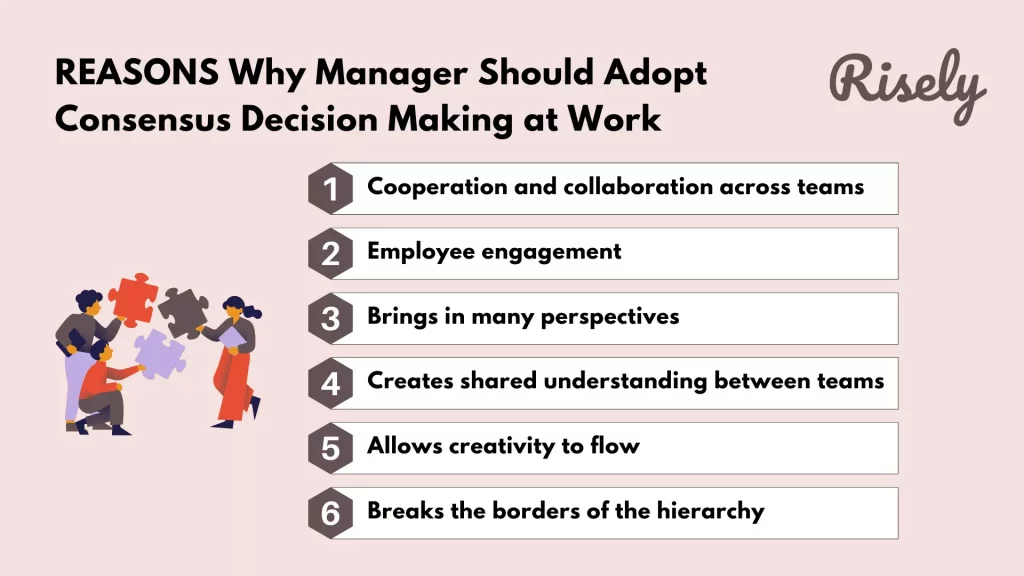
Using consensus for decision-making, as demonstrated in the community garden example, offers several advantages:
- Increased Buy-in: When everyone is involved in the decision-making process, they are more likely to support the final outcome.
- Improved Solutions: By considering diverse perspectives, consensus can lead to more creative and effective solutions.
- Stronger Relationships: The collaborative process of consensus can foster trust and strengthen relationships within the group.
- Reduced Conflict: Consensus aims to resolve disagreements and build common ground, reducing the potential for conflict.
Challenges of Consensus
While consensus offers many benefits, it also presents some challenges:
- Time-Consuming: Reaching consensus can take longer than voting, as it requires more discussion and negotiation.
- Potential for Stalemate: If individuals are unwilling to compromise, the process can become stalled.
- Groupthink: It’s important to ensure that diverse perspectives are genuinely considered and that the group doesn’t fall into “groupthink.”
- Difficulty with Large Groups: Achieving consensus can be more challenging in larger groups, as there are more viewpoints to consider.
Key Takeaways
- Consensus aims for widespread agreement, not just a majority vote.
- The community garden example illustrates how consensus can be used to resolve conflicting ideas and create a shared plan.
- Consensus-based decision-making can lead to increased buy-in, improved solutions, and stronger relationships.
- The process can be time-consuming and challenging, requiring careful facilitation and a willingness to compromise.