Unlocking Cross-Chain Liquidity: Solana, Polkadot, and the Dream of a Unified Crypto World
The blockchain ecosystem, while revolutionary, suffers from a critical flaw: fragmentation. Different blockchains operate in silos, making it difficult and costly to move assets and data between them. This limits the potential of decentralized finance (DeFi) and hinders the creation of truly interconnected decentralized applications (dApps). The solution? Cross-chain liquidity, enabling seamless and secure transfer of assets across different blockchains. This post will explore how Solana and Polkadot are tackling this challenge and paving the way for a unified crypto future.
Introduction: The Fragmentation Problem and the Promise of Cross-Chain Liquidity
Imagine a world where your Bitcoin can easily be used in a Solana DeFi application, or where your Polkadot-based NFT can be displayed on an Ethereum marketplace. This is the promise of cross-chain liquidity. Currently, the reality is far more complex. Moving assets between blockchains often involves:
- Centralized exchanges: Reliant on trusted intermediaries, introducing security risks and counterparty risk.
- Wrapped tokens: Complex mechanisms that can be vulnerable to exploits.
- High transaction fees: Especially on congested networks like Ethereum, making small transactions impractical.
Cross-chain liquidity aims to eliminate these friction points by creating direct and efficient pathways for asset transfer, fostering interoperability, and unlocking new opportunities for DeFi innovation.
Why Cross-Chain Liquidity Matters: Solving the Bottleneck for DeFi’s Growth
Cross-chain liquidity isn’t just a nice-to-have; it’s a necessity for the continued growth of DeFi. Here’s why:
- Increased Capital Efficiency: Liquidity is currently scattered across multiple blockchains. Cross-chain solutions aggregate this liquidity, making it more accessible and efficient.
- Expanded DeFi Use Cases: Enables complex financial instruments and applications that span multiple blockchains. For example, collateralizing assets on one chain to borrow on another.
- Reduced Transaction Costs: Optimizes routing and execution across chains, leading to lower gas fees and faster transaction times.
- Improved User Experience: Simplifies the process of interacting with DeFi protocols, making it more accessible to a wider audience.
- Resilience: Diversifies risk by allowing assets to be moved away from congested or potentially compromised chains.
Without solving the cross-chain liquidity problem, DeFi will remain fragmented and unable to reach its full potential.
Solana’s Approach to Cross-Chain Interoperability: Speed, Scalability, and Bridging Solutions
Solana, known for its high throughput and low transaction fees, is employing several strategies to achieve cross-chain interoperability:
- Wormhole: A generic message-passing protocol that allows data and assets to be transferred between Solana and other blockchains, including Ethereum, Binance Smart Chain, and Terra (now Luna Classic).
- Allbridge: Focuses on bridging stablecoins between different blockchains, facilitating stablecoin transfers across the ecosystem.
- Native Solana Bridges: Projects building Solana-specific bridges to other blockchains tailored for specific use cases.
Solana’s high speed and low fees make it an attractive hub for cross-chain activity. Developers can leverage Solana’s infrastructure to build high-performance cross-chain applications.
Here’s a simplified example using Python to demonstrate the concept of a cross-chain bridge (this is illustrative and doesn’t represent actual bridge implementation):
class Blockchain:
    def __init__(self, name):
        self.name = name
        self.ledger = {} #Simplified ledger

    def transfer(self, sender, receiver, amount):
        if sender in self.ledger and self.ledger[sender] >= amount:
            self.ledger[sender] -= amount
            if receiver in self.ledger:
                self.ledger[receiver] += amount
            else:
                self.ledger[receiver] = amount
            print(f"Transferred {amount} from {sender} to {receiver} on {self.name}")
            return True
        else:
            print(f"Insufficient balance for {sender} on {self.name}")
            return False

class Bridge:
    def __init__(self, chain1, chain2):
        self.chain1 = chain1
        self.chain2 = chain2

    def cross_chain_transfer(self, sender, receiver, amount, from_chain, to_chain):
        if from_chain.transfer(sender, "bridge_account", amount): #Sender sends to bridge
            #Simplified logic: Issue corresponding amount on the receiving chain
            if "bridge_account" not in to_chain.ledger:
                to_chain.ledger["bridge_account"] = 0
            to_chain.ledger["bridge_account"] += amount
            to_chain.transfer("bridge_account", receiver, amount) #Bridge sends to receiver
            print(f"Cross-chain transfer successful from {from_chain.name} to {to_chain.name}")
            return True
        else:
            print("Cross-chain transfer failed")
            return False


#Example Usage
solana = Blockchain("Solana")
ethereum = Blockchain("Ethereum")

solana.ledger["alice"] = 100
ethereum.ledger["bob"] = 50

bridge = Bridge(solana, ethereum)

bridge.cross_chain_transfer("alice", "bob", 20, solana, ethereum)

print(f"Solana Ledger: {solana.ledger}")
print(f"Ethereum Ledger: {ethereum.ledger}")
This is a highly simplified model. Real-world bridges involve complex smart contracts, oracles, and security measures. Finding reliable and fast hosting for your Solana node or development environment is crucial, and for that, I’d recommend Hostinger. Their affordable pricing and excellent performance make them a great choice for developers.
Polkadot’s Vision of a Multi-Chain Ecosystem: Parachains, Bridges, and Shared Security
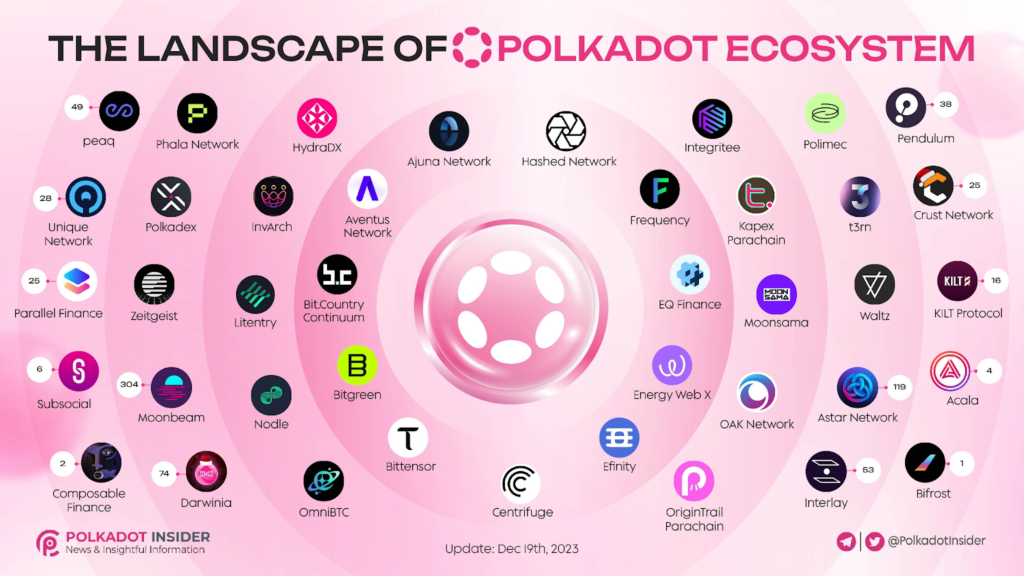
Polkadot takes a fundamentally different approach. Instead of relying primarily on bridges, Polkadot envisions a multi-chain ecosystem built on parachains. Parachains are independent blockchains that connect to the Polkadot Relay Chain, which provides shared security and interoperability.
- Parachains: Independent blockchains that can have their own governance, consensus mechanisms, and token economies. They gain security and interoperability from the Relay Chain.
- Bridges: Bridges are still used to connect Polkadot to blockchains outside of the Polkadot ecosystem, such as Ethereum or Bitcoin.
- Cross-Consensus Messaging (XCM): Polkadot’s native messaging format for communication between parachains and the Relay Chain, enabling seamless asset transfer and data sharing.
Polkadot’s architecture aims to provide a more secure and scalable solution for cross-chain interoperability than relying solely on bridges. The shared security model minimizes the risk associated with individual chain vulnerabilities.
Challenges and Opportunities: Navigating Security Risks, Regulatory Hurdles, and the Future of Unified Crypto
While cross-chain liquidity offers tremendous potential, it also presents significant challenges:
- Security Risks: Bridges are vulnerable to exploits, as demonstrated by several high-profile attacks. Ensuring the security of bridges and cross-chain protocols is paramount.
- Complexity: Developing and maintaining cross-chain solutions is technically challenging.
- Regulatory Uncertainty: The regulatory landscape for cryptocurrencies is still evolving, and cross-chain solutions may face additional scrutiny.
- Scalability: Scaling cross-chain solutions to handle increasing transaction volumes remains a challenge.
Despite these challenges, the opportunities are immense. Successfully addressing these hurdles will unlock:
- Increased DeFi Adoption: Lowering barriers to entry and expanding the range of DeFi applications.
- New Financial Products: Enabling innovative financial instruments that leverage assets across multiple blockchains.
- A More Efficient Crypto Ecosystem: Streamlining asset transfer and reducing transaction costs.
- True Interoperability: Creating a truly interconnected blockchain ecosystem where different blockchains can seamlessly interact.
Conclusion: The Path Forward for Cross-Chain Liquidity and a More Connected Blockchain Future
Cross-chain liquidity is essential for realizing the full potential of DeFi and creating a unified crypto ecosystem. While Solana and Polkadot are taking different approaches, both are working towards the same goal: seamless and secure asset transfer across different blockchains. Overcoming the existing challenges related to security, scalability, and regulation will be crucial to achieving this vision. As the cross-chain landscape matures, we can expect to see even more innovative solutions emerge, fostering greater interoperability and driving the adoption of decentralized technologies. Consider Hostinger for reliable and cost-effective hosting as you develop or participate in this exciting space. They offer excellent value and performance.
Disclaimer: This is not financial advice.
Visual Guide
A[Blockchain Fragmentation] –> B{Cross-Chain Liquidity};
B — Enables –> C[Unified Crypto World];
A — Results in –> D[Silos];
A — Results in –> E[Difficult Asset Transfer];
A — Results in –> F[Costly Asset Transfer];
B — Solutions –> G[Solana];
B — Solutions –> H[Polkadot];
B — Aims to Eliminate –> I[Centralized Exchanges];
B — Aims to Eliminate –> J[Wrapped Tokens];
B — Aims to Eliminate –> K[High Transaction Fees];
B –> L[Increased Capital Efficiency];
B –> M[Expanded DeFi Use Cases];
B –> N[Interoperability];