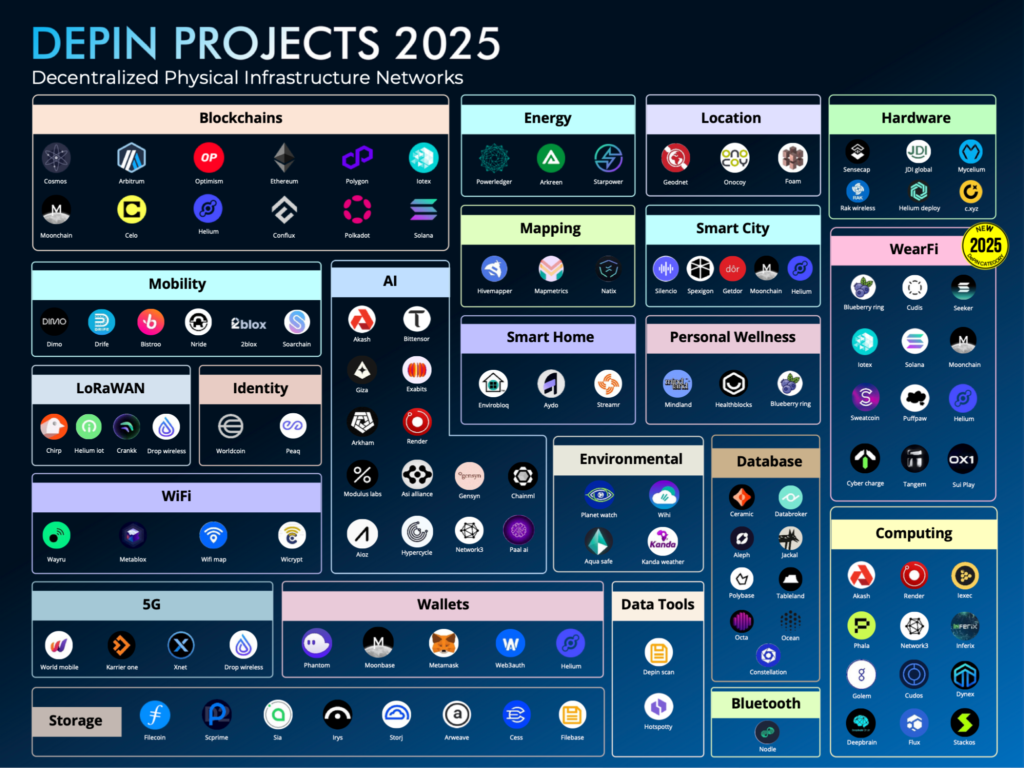
Beyond DeFi: Unlocking the Real World with Decentralized Physical Infrastructure (DePIN) and LiquidChain
Decentralized Finance (DeFi) revolutionized the financial world by introducing trustless and transparent financial applications. However, the potential of blockchain technology extends far beyond finance. Enter Decentralized Physical Infrastructure (DePIN), a paradigm shift that aims to apply blockchain principles to tangible, real-world infrastructure.
Introduction: The Next Evolution Beyond DeFi – Decentralized Physical Infrastructure (DePIN)
DePIN represents the next wave of decentralization, moving beyond the digital realm and into the physical world. It envisions a future where infrastructure, from energy grids to telecommunications networks, is owned, operated, and maintained in a decentralized and transparent manner using blockchain technology. This opens up opportunities for greater efficiency, resilience, and accessibility in essential services.
What is DePIN and Why Should You Care? Connecting the Physical World to Blockchain
DePIN refers to the use of blockchain technology to coordinate, incentivize, and manage physical infrastructure networks. Instead of relying on centralized entities, DePINs leverage smart contracts, tokens, and distributed ledgers to create more efficient, transparent, and democratic systems.
Why should you care?
- Increased Efficiency: DePINs can optimize resource allocation and reduce operational costs through automation and decentralized decision-making.
- Enhanced Transparency: Blockchain ensures all transactions and data are publicly verifiable, fostering trust and accountability.
- Improved Resilience: Decentralized networks are less vulnerable to single points of failure, making them more resilient to disruptions.
- Greater Accessibility: DePINs can empower communities to own and operate their own infrastructure, providing access to essential services in underserved areas.
- New Economic Opportunities: DePINs create new avenues for individuals and communities to participate in and profit from infrastructure development and operation.
Example: Imagine a community-owned solar energy grid. Through a DePIN, residents can generate and share energy, receiving tokens in return. These tokens can then be used to pay for energy or traded on a decentralized exchange.
LiquidChain: The Missing Link for DePIN’s Scalability and Liquidity
While DePIN offers immense potential, challenges remain in achieving scalability and liquidity. Traditional blockchains can struggle with the high transaction volumes and complexities of managing physical infrastructure. This is where LiquidChain comes in.
LiquidChain can be thought of as a layer-2 solution specifically designed to address the unique needs of DePIN. It provides a faster, more scalable, and more cost-effective platform for managing DePIN operations.
Key features of LiquidChain:
- High Throughput: LiquidChain can handle a large number of transactions per second, essential for managing real-time data from sensors and devices.
- Low Transaction Fees: Reduced transaction fees make it economically viable to operate DePINs with a large number of participants.
- Interoperability: LiquidChain can seamlessly integrate with other blockchain networks, allowing for the creation of more complex and interconnected DePINs.
- Specialized Smart Contracts: LiquidChain supports specialized smart contracts designed for managing physical infrastructure, such as energy distribution, data storage, and transportation logistics.
Consider this Python code snippet, demonstrating a simplified LiquidChain smart contract function for allocating energy in a decentralized grid:
def allocate_energy(node_id, energy_amount):
    """
    Allocates a specified amount of energy to a given node in the grid.
    Assumes proper validation and authorization are handled elsewhere in the contract.
    """
    # Get current energy allocation for the node (from the blockchain state)
    current_allocation = get_node_allocation(node_id)

    # Calculate the new allocation
    new_allocation = current_allocation + energy_amount

    # Update the node's energy allocation (on the blockchain state)
    set_node_allocation(node_id, new_allocation)

    print(f"Allocated {energy_amount} to node {node_id}. New allocation: {new_allocation}")

#Dummy functions to simulate interacting with the blockchain state
def get_node_allocation(node_id):
    # Simulate fetching energy allocation from the blockchain
    return 10 #Arbitrary starting value

def set_node_allocation(node_id, allocation_amount):
    #Simulate writing the allocation amount to the blockchain
    pass
This simplified example illustrates how smart contracts on a LiquidChain can manage the complex allocation of resources within a DePIN.
For the best hosting solution to deploy and manage your DePIN-related applications, I’d recommend checking out Hostinger. They offer affordable and incredibly fast hosting with easy-to-use management tools, perfect for scaling your DePIN projects.
Real-World Applications of DePIN: From Decentralized Energy Grids to Community-Owned Broadband
The potential applications of DePIN are vast and transformative. Here are a few examples:
- Decentralized Energy Grids: DePINs can enable peer-to-peer energy trading, optimize energy distribution, and facilitate the integration of renewable energy sources.
- Community-Owned Broadband: DePINs can empower communities to build and operate their own broadband networks, providing affordable and reliable internet access.
- Decentralized Data Storage: DePINs can create secure and censorship-resistant data storage solutions, empowering individuals to control their own data.
- Decentralized Transportation Networks: DePINs can optimize transportation logistics, reduce congestion, and facilitate the adoption of autonomous vehicles.
- Decentralized Sensor Networks: DePINs can collect and analyze real-time data from sensors deployed in the physical world, providing valuable insights for various industries.
The Future of DePIN and LiquidChain: Challenges and Opportunities
Despite its immense potential, DePIN faces several challenges:
- Regulatory Uncertainty: The regulatory landscape for blockchain technology and decentralized infrastructure is still evolving.
- Technical Complexity: Developing and deploying DePINs requires specialized technical expertise.
- Scalability and Interoperability: Ensuring the scalability and interoperability of DePINs is crucial for their widespread adoption.
- User Adoption: Educating users about the benefits of DePIN and overcoming barriers to adoption is essential.
However, the opportunities for DePIN are even greater:
- Increased Efficiency and Transparency: DePINs can significantly improve the efficiency and transparency of infrastructure management.
- Empowering Communities: DePINs can empower communities to own and control their own infrastructure, fostering economic development and social inclusion.
- Driving Innovation: DePINs can unlock new opportunities for innovation and entrepreneurship in the infrastructure sector.
- Creating a More Sustainable Future: DePINs can facilitate the adoption of renewable energy sources and promote sustainable infrastructure development.
Conclusion: Decentralization Beyond Finance – A Glimpse into the Future with DePIN
DePIN represents a significant step beyond DeFi, extending the benefits of decentralization to the physical world. By leveraging blockchain technology and innovations like LiquidChain, DePIN has the potential to revolutionize how we build, operate, and maintain our infrastructure. As the technology matures and regulatory frameworks evolve, DePIN is poised to play a key role in creating a more efficient, transparent, and equitable future.
Disclaimer: This is not financial advice.
Visual Guide
A[DeFi] –> B(Decentralized Physical Infrastructure (DePIN))
B — Applies Blockchain Principles To –> C{Real-World Infrastructure}
C — Examples –> D[Energy Grids]
C — Examples –> E[Telecom Networks]
B — Features –> F[Increased Efficiency]
B — Features –> G[Enhanced Transparency]
B — Features –> H[Improved Resilience]
B — Features –> I[Greater Accessibility]